 The Styrian
Pumpkin Seed Oil Journal
The Styrian
Pumpkin Seed Oil Journal
- The Styrian Pumpkin Seed Oil Journal
Shop EN
pumpkinseedoil.ccShop DE
kuerbiskernoel.cc
About
This website also contains some content created with the support of AI.
Settle in. This is the full pumpkin seed oil story.
We’ll cover where it grows, how it’s pressed, and how to spot the real thing.
Origin, kitchen, composition, wellness, and quality — all in one journal.
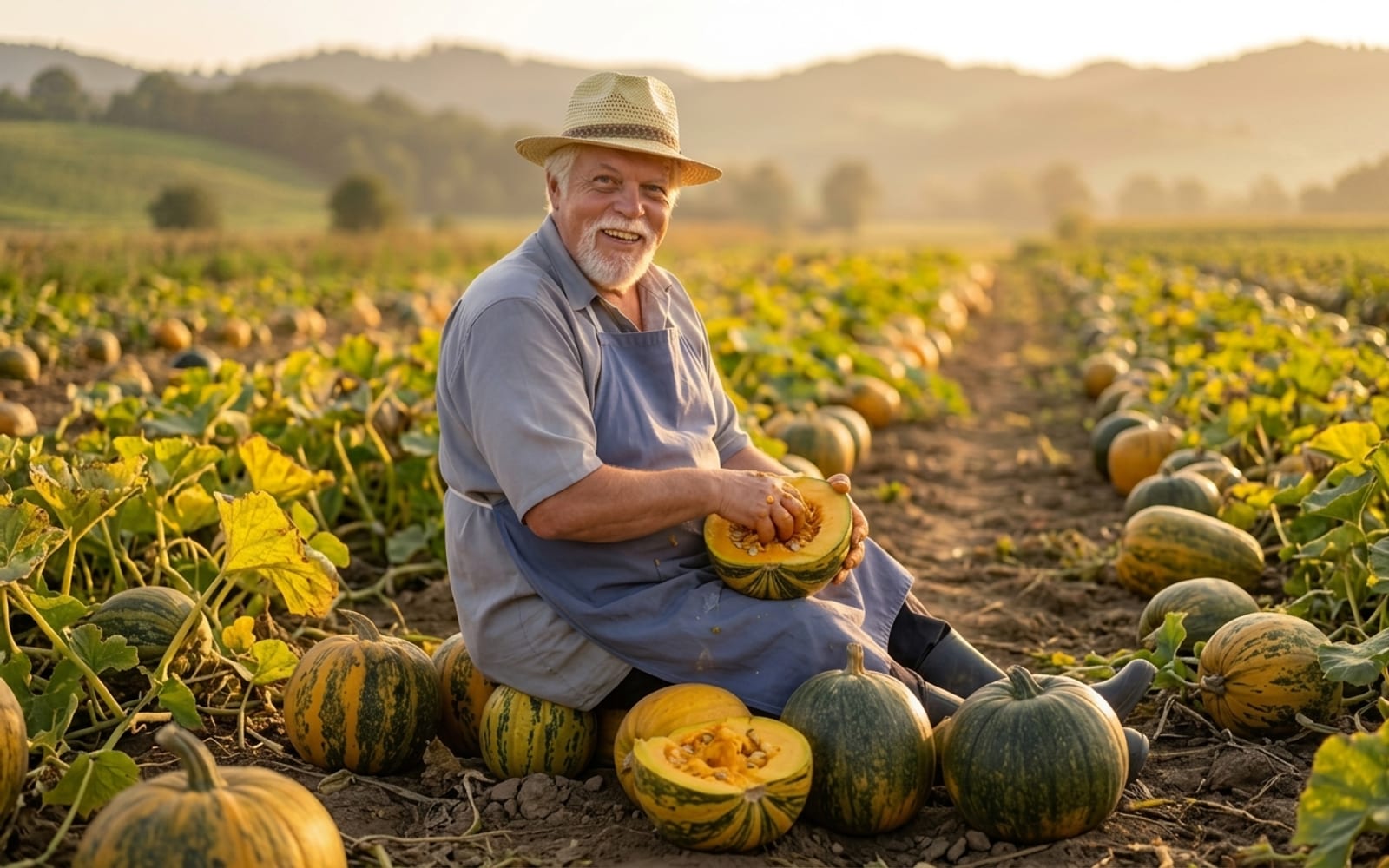
There is a corner of southern Austria where the landscape turns dark green in September. Fields of flat-lying pumpkin vines stretch toward the horizon, their fruits splitting open to reveal seeds coated in a thin, oil-rich hull. This is Styria, and the oil pressed from those seeds — deep emerald-black in the bottle, nutty and rich on the tongue — has been central to the regional kitchen for centuries. The Styrian Pumpkin Seed Oil Journal exists to document, explain, and celebrate it.
This journal is not a shop. It is an editorial resource: a long-form magazine dedicated to one ingredient. We write about origin and geography, about the slow craft of the oil mill, about why the European PGI label matters and how to read it. We cover the kitchen — salad dressings, soups, desserts, bread — and the composition questions that come up when people want to understand what they are actually eating. We keep a close, careful eye on the wellness topics that surround the oil, always separating traditional use from peer-reviewed evidence. And we run a journal of longer reads that approach pumpkin seed oil the way a wine magazine approaches a great estate: with curiosity, depth, and genuine affection.
Discover: Origin and Identity

The Discover section answers the foundational questions. What exactly is Styrian pumpkin seed oil? Where does it come from? Why is it different from the oil sold under similar names elsewhere in the world? The key answer lies in a specific cultivar — the Styrian hull-less pumpkin, Cucurbita pepo var. styriaca — and in a protected geographical indication that ties production to a defined region and a set of traditional methods.
The PGI story is worth understanding in full. Styrian Pumpkin Seed Oil PGI is one of the few cold-pressed plant oils in Europe to carry this designation. The rules govern not just the source of the seeds but the entire production process: grinding, roasting, pressing, and bottling. The result is an oil with a consistent sensory and chemical profile that cannot be replicated by pressing seeds grown elsewhere or by cutting corners in the mill. Start with what Styrian pumpkin seed oil is and the PGI designation explained.
Kitchen: Cooking and Flavour

Styrian pumpkin seed oil is one of the most flavour-active finishing oils in the world. A single tablespoon transforms a bowl of pumpkin soup into something deeper and more complex. The same drizzle over vanilla ice cream — a combination that sounds improbable until you try it — creates a contrast that has become a Styrian culinary signature. The Kitchen section explores these uses systematically: how to drizzle, how to dress, how to incorporate the oil into baking, and how heat changes its character. Practical steps are in how to use pumpkin seed oil in the kitchen.
The most important rule in that section is also the simplest: do not fry with pumpkin seed oil. Its low smoke point and delicate aromatic compounds make it a finishing oil, full stop. Everything else — vinaigrettes, cold sauces, drizzles over cheese, stirred into yoghurt, whisked into a marinade used at room temperature — is open territory.
Composition: What Is in the Bottle

The Composition section moves from kitchen to laboratory. Styrian pumpkin seed oil is notably rich in polyunsaturated fatty acids, particularly linoleic acid (omega-6) and oleic acid (omega-9). It contains measurable levels of vitamin E in the form of gamma-tocopherol, a range of phytosterols — especially delta-7-sterols, which are unusual and relatively rare in the plant kingdom — and a collection of carotenoids and chlorophyll that give the oil its characteristic colour. See also key ingredients and active compounds.
Understanding these components matters for several reasons. It explains why the oil behaves the way it does in cooking (polyunsaturated fats are more heat-sensitive than saturated ones). It gives context to the wellness discussions. And it helps consumers compare labels and make informed choices about what they are buying.
Wellness: Reading the Research Honestly

Pumpkin seed oil attracts a great deal of health-related interest, much of it legitimate and some of it overblown. The Wellness section does not avoid these topics; it engages with them carefully. The most extensively studied area is the effect of pumpkin seed extract and oil on lower urinary tract symptoms associated with benign prostatic hyperplasia. Several clinical studies have examined this connection, and the results are interesting enough to discuss — while being careful to note what the evidence actually shows rather than what enthusiastic retailers sometimes claim. An entry point is the evidence overview.
Other areas covered include the oil's role in supporting skin health, its phytosterol content in relation to cholesterol, traditional use in animal care, and the question of whether it is appropriate as a supplement for specific groups. Throughout, the journal applies a consistent standard: cite the evidence, acknowledge the limits, and never present a food oil as a medicine or as a guarantee of clinical outcomes.
Quality: Buying Well

The Quality section is practical. It explains what the PGI seal guarantees and what it does not. It covers the sensory markers of a good bottle — colour, aroma, viscosity, flavour — and explains why price is one of the more reliable proxies for quality in this category. It describes the difference between traditionally roasted and cold-pressed variants, and explains why the roasting step, when done well, is not a compromise but a feature. It also covers storage, shelf life, and what to look for when a bottle has been open for a while. For purchase channels, see where to buy authentic oil.
Journal: Longer Reads

The Journal section is where the magazine format comes fully alive. Here you will find longer essays on the Styrian landscape and its agricultural calendar, a narrative account of what happens inside an oil mill on pressing day, reflections on the culture of green-gold, and the kind of slow food writing that regards a single ingredient as worthy of real literary attention. These pieces are written for readers who already love the oil and want to understand it more deeply.
About This Site

The Styrian Pumpkin Seed Oil Journal is an independent publication. It earns its small operational costs through transparent affiliate links to the online shop at pumpkinseedoil.cc, where authentic Styrian PGI oil can be purchased. The editorial content is written independently of commercial interests. No claim on this site has been paid for by any producer, and no product reviewed here has been provided free of charge in exchange for coverage.
If you have a question this journal has not yet answered, use the FAQ or the contact form. We expand the archive regularly based on what readers ask. The archive now covers about 170 individual topics, from the technical chemistry of the delta-7 phytosterols to the simple question of whether you can fry with pumpkin seed oil. The answer to the last question, by the way, is no — but the full explanation of why is more interesting than the single-word answer suggests.
Shop nutty roasted Styrian seed oil
Shop now